

Individually or groups
Children with autism are at a distinct disadvantage when put in groups with non-autistic children with the purpose of socializing them. Unless a lot of preparation has taken place in a therapeutic setting, those kids have no chance of living up to our standards. Simply put, socialization implies a natural ability to socialize. Autistic children lack this ability. Furthermore, if no one has gone to the trouble of proving to them that socializing can be beneficial and helpful to them, they also lack any interest of trying to develop sociability. I've heard doctors make the following claim, far too often: 'The kid just needs more time around his peers, and he'll turn out fine.' That is only true when the child knows how to maneuver within a group according to social norms. It is like dropping the kid in the deep sea before teaching it how to swim. Not only will they not improve, but their failure to do so will lower their morale as well as that of their parents, people who desperately need all hope and optimism they can get, in order to encourage their kid.
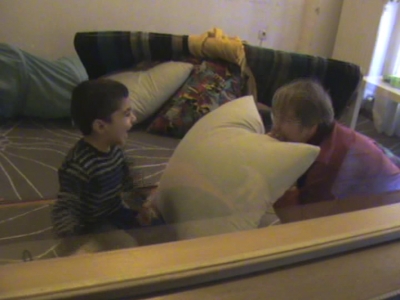
Showing is telling, so the first step is showing the kid all the intricacies of socializing. That is best achieved in a 1 on 1 setting, where the child sees the benefits and is more easily able to pick up on the subtle technique of that craft. Afterwards, having developed the basic tools of sociability and reciprocity, the child can improve with practice, indeed, as the doctors say, alongside his peers.

